Email: sales@bondsil.com
Tel:+86 - 0755 2105 3189
Addr: H Building ,Xinwei The 3rd Industrial Park,Dalang Street,Longhua New District , Shenzhen City ,Guangdong Province ,China

How to remove silicone residue?
20 Jul 2026
Silicone rubber, after curing, forms a three-dimensional cross-linked structure with extremely strong chemical inertness. It is insoluble in most common solvents and not easily decomposed by conventional cleaning agents, making residue removal far more difficult than with ordinary adhesives. Depending on the residue thickness, substrate type, and application scenario, different removal methods can be selected, resulting in significant differences in efficiency and effectiveness.
I. Physical and Mechanical Removal: Cleaning Thick Adhesive Layers
For thicker, incompletely cured silicone or large areas of excess adhesive, physical methods can be used for initial cleaning.
Common methods: Scraping with a blade, scraping with a plastic scraper, wiping with a lint-free cloth, etc. Suitable for thick, fresh adhesive residue that is not yet fully cross-linked.
Advantages and limitations: Simple operation, no chemical reagents required, but only removes large surface areas of adhesive; cannot clean thin residues or adhesive seepage into micropores, and can easily scratch the surface of precision workpieces; unsuitable for optical or mirror-like substrates.
II. Wiping with Common Solvents: Cleaning Minor Adhesive Residues
Isopropanol, acetone, white spirit, and other common organic solvents have a certain wiping effect on minor uncured silicone stains.
Applicable scenarios: Fresh, uncured adhesive residue, and very thin surface adhesive marks.
Significant limitations: Basically ineffective on fully cured, cross-linked silicone; it can only swell the surface layer and cannot completely decompose it; some solvents may corrode plastic and painted substrates; compatibility testing is required before use.
III. Specialized Silicone Rubber Sol-Formula: An Industrial Cleaning Solution
For cured silicone rubber residue, specialized solvent-formulas are the most mature and efficient solution in the industrial field, and a standard tool for rework operations.
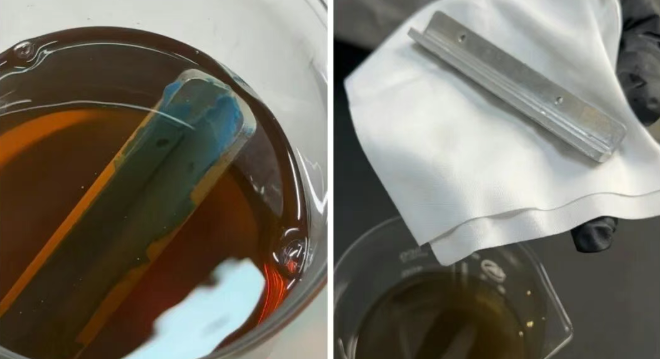
Mechanism of Action: Through a special combination of organic penetrant and surfactant, it penetrates into the cross-linked network of silicone, causing the cured silicone rubber elastomer to swell and degrade into an oily paste, thus losing its cohesive force and detaching from the substrate surface, achieving thorough removal.
Key Advantages:
Can dissolve fully cured silicone rubber; effective on both fresh and aged residues;
Non-corrosive to hard substrates such as metal, glass, and ceramics; leaves a bright, streak-free surface after cleaning;
Effective simply by soaking or brushing; no vigorous scraping required, minimizing damage to workpieces.
Applicable Scenarios: Rework of silicone-coated metal parts, cleaning of silicone residue from molds, repair of silicone residue from electronic components, removal of silicone from glass and ceramic surfaces, etc.
Precautions: Some solvents can dissolve plastics such as ABS. Before use, confirm the material compatibility of the workpiece. Do not mix with water or other cleaning agents.
IV. Heating-Assisted Removal: A Specific Auxiliary Method
For silicone residue on high-temperature resistant substrates, appropriate heating can soften the adhesive layer before physical removal.
However, silicone itself has excellent temperature resistance; ordinary heating can only slightly soften it, not completely decompose it. It needs to be used in conjunction with other methods; using it alone has limited effect.
Product Recommendation
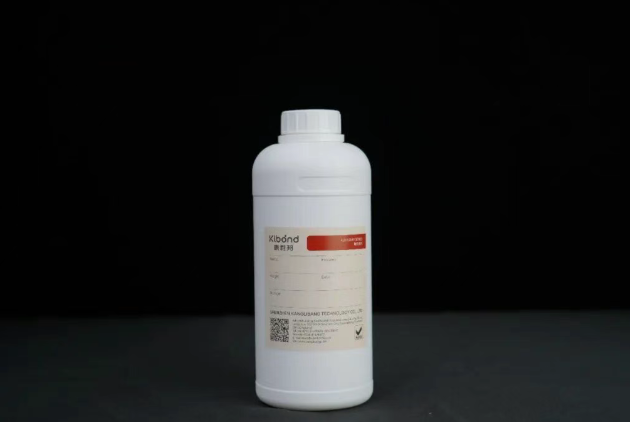
Product Name: CL-T04 Silicone Rubber Solvent
Product Introduction: A professional silicone rubber residue remover, formulated with various surfactants and organic penetrants. It can degrade and dissolve cured silicone rubber into an oily paste, achieving thorough removal.
Product Characteristics: Stable and efficient solvent performance; leaves metal surfaces shiny after removal; non-corrosive to metal, glass, ceramic, and other substrates; safe and environmentally friendly.
Application Areas: Repair of silicone-coated metal parts; removal of adhesive from metal-plastic bonded parts; suitable for cleaning silicone residue from copper, alloys, stainless steel, glass, ceramic, and other surfaces.